Namecheap Deplatformed Genocide.live
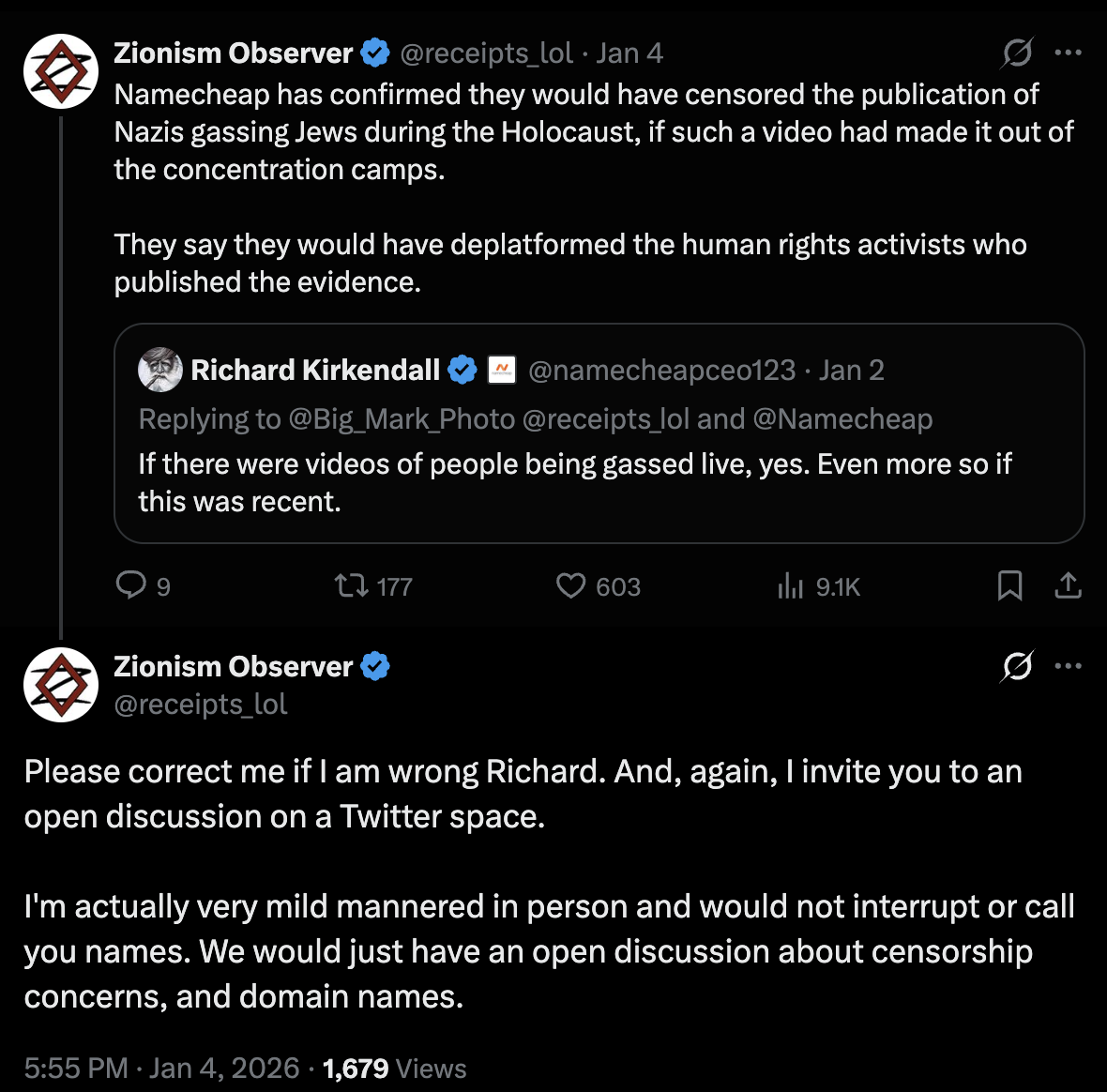
Former CEO of Namecheap said he also would have censored evidence of Nazi gas chambers
It has been over two years since Israel began the mass-extermination phase of its genocide. For more than two years, the world watched as Israel systematically destroyed the Gaza Strip and massacred Palestinians in Gaza.
The sheer volume of information that has been coming out of the Gaza genocide enabled human rights advocates, governments, and global media an unprecedented view into the scope and nature of Israeli atrocities. However, those same institutions were not prepared — or perhaps not willing — to preserve and process this vital evidence at such a never-before-seen scale.
Databases for Palestine was founded with one mission: we build memory, so one day there might be justice.
The Namecheap deplatform
On New Years morning our mission was abruptly halted when a company that has provided services to Databases for Palestine without issue since our founding decided to de-platform us.
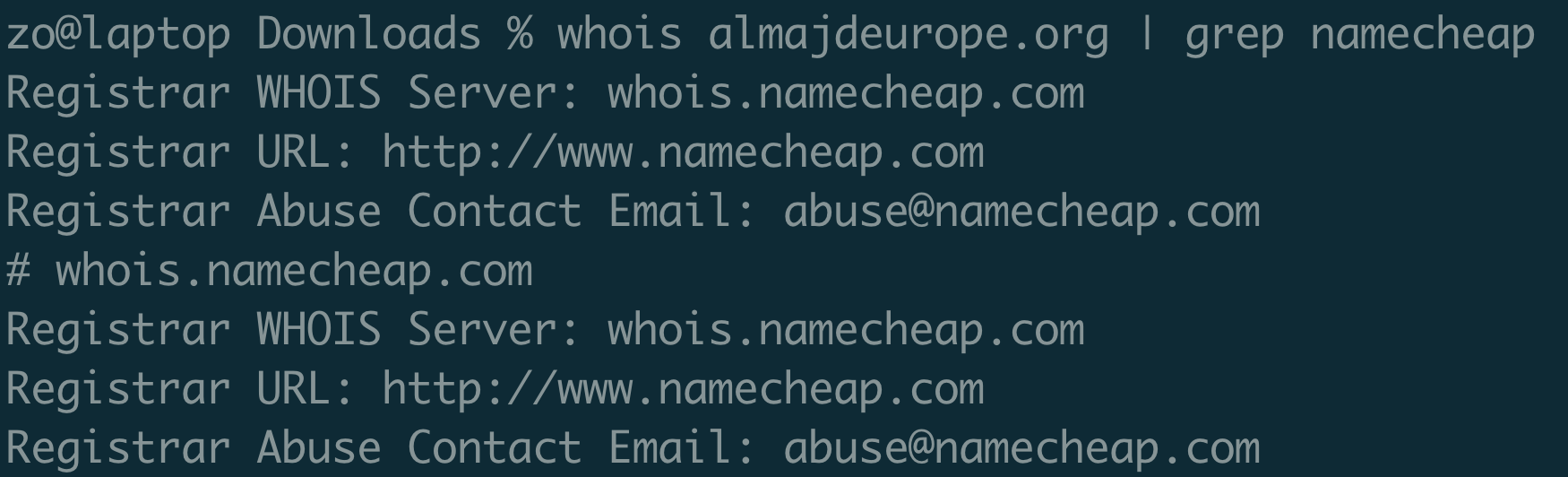
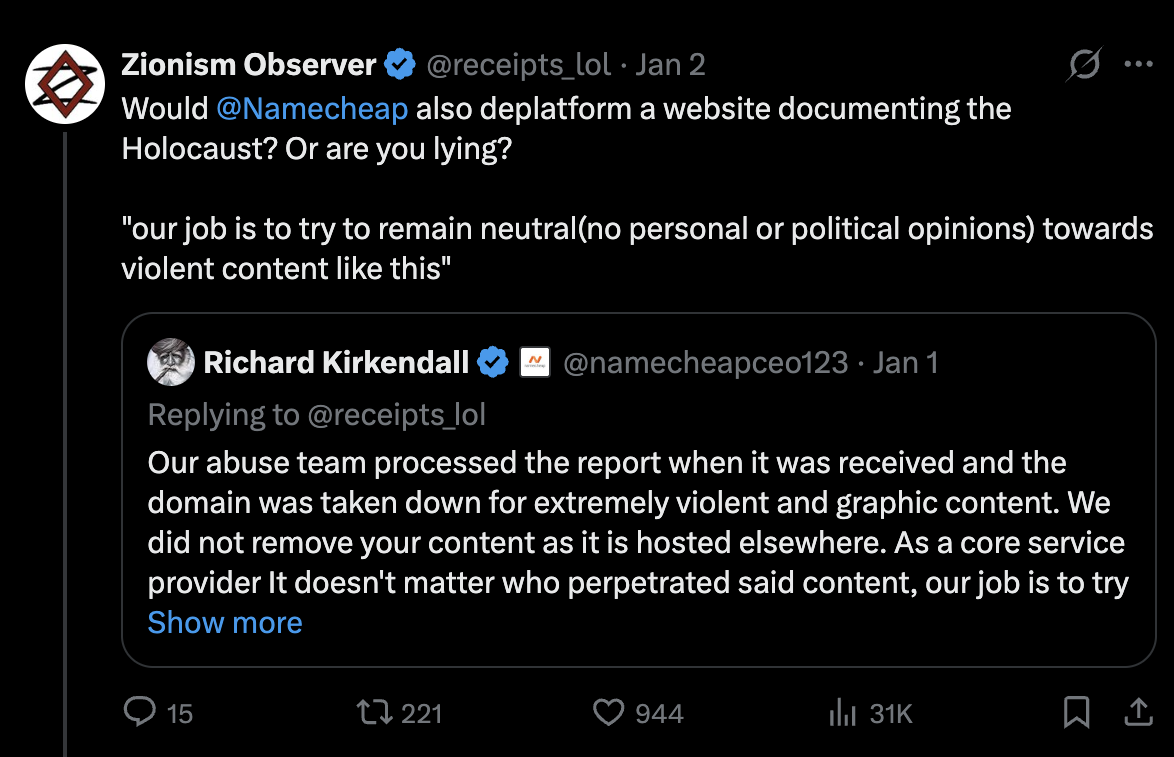
Namecheap told Databases for Palestine that our work was in violation of their policy, citing a rule against hosting websites that display violent content. There was no notice, unless you count two emails sent in the 48 hours leading up to New Years Eve.
There was no option to appeal or explain. They seized our domain, as they said they would.
The cited "policy" would have censored evidence of Nazis gassing the Jews
We will be the first to admit that much of the digital evidence we have preserved is shocking and violent; that is the inherent nature of genocide. However, for Namecheap to enforce this "policy" against us with barely any warning, without discussion, and without consideration for the context is beyond dangerous.
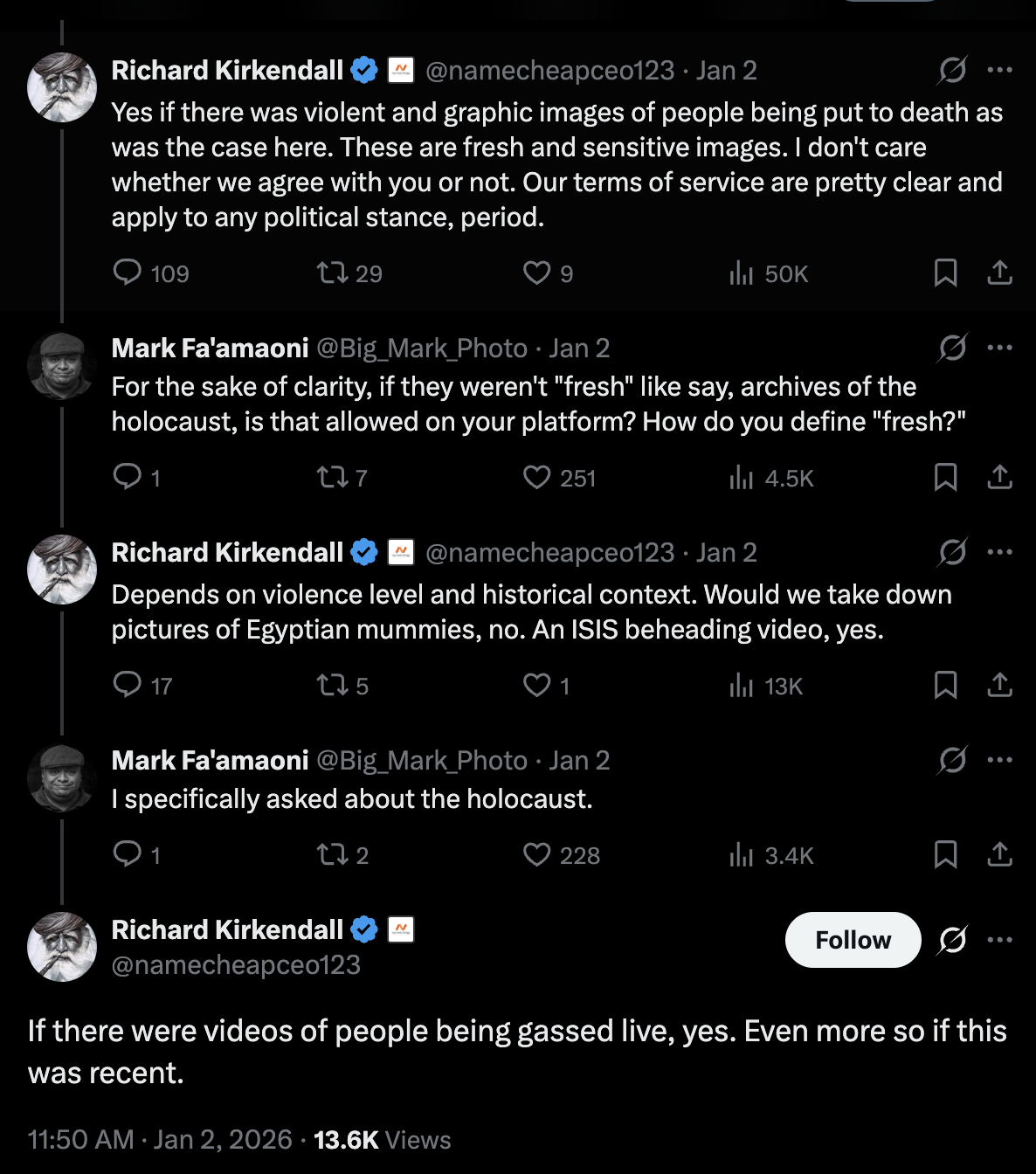
Namecheap did not simply stay quiet and fall back on sterile legalese as an explanation. When we pointedly asked if Namecheap would have censored evidence of the Holocaust, one of their founders, Richard Kirkendall replied:
If there were videos of people being gassed live, yes [Namecheap would have censored the evidence of the Holocaust]. Even more so if this was recent.
— Richard Kirkendall
Such a "policy" enables, encourages, and erases acts of genocide.
The fallout
The material harm resulting from these unjustified actions can not be overstated.
As a result of Namecheap seizing our domain name, for four whole days archivists working with Databases for Palestine were unable to preserve the flood of information coming out of Gaza, just as Israel launched yet another series of horrific massacres of families.
Organizations around the world that use our work in ongoing accountability efforts were unable to access our archives. Citations linking to our work in international legal filings and human rights reports suddenly led nowhere. Justice for Palestinians, long denied, was delayed even further.
This is the first interruption of our archival work since we started Databases for Palestine. While every effort was taken to make up for the lost time, digital evidence is by nature often fleeting - there are undoubtedly pictures and videos that we will now never be able to preserve because of this outage. This is not abstract harm. It can mean that children dismembered in airstrikes will be forgotten, that instances of Israeli soldiers using Palestinians as human shields or bait are not documented, that incidents or testimony of torture and rape are lost.
Israel’s genocide has not stopped.
The war on memory continues
While we will never know for sure if pressure from the Israeli government, private Zionist organizations, or an organized mass-reporting campaign played a role in the decisions made by Namecheap, it must be made clear what they and others who hinder accountability efforts are doing: waging a war on memory, in an effort to rewrite the history of the genocide.
If the long arc of history can be bent towards justice, it will require building memory. There can be no justice, there can be no healing, without memory.
Our work to preserve memory has only just begun.
Israel’s genocide has not stopped.
We are building new defenses against censorship
Namecheap's censorship made Databases for Palestine painfully aware that the infrastructure we created to preserve memory must be more robust. We always knew this day would come, and we were not ready.
We are taking a variety of actions to ensure that no single service provider can take our entire project down at a whim:
- 3 backup domains for each project
- Control panel decoupled from domains
- Handshake domains: .palestine TLD
- Redundant DNS servers
We are also working on ways to more quickly and easily rebuild archives, in the event of a hosting deplatform.
The Namecheap episode is not the first, and will surely not be the last, attempt at destroying Databases for Palestine’s efforts to preserve the memory of Israel’s genocide in Gaza. The actions taken to de-platform our work only further convinced us of the importance it holds in international accountability efforts.
We hardened our defenses. We built redundancies. We return to the work.
Israel’s genocide has not stopped.
At the time Namecheap deplatformed us
Namecheap provided DNS services for a human trafficking organization working to ethnically cleanse Gaza. Receipts
Other coverage
NeoSmart Technologies: Namecheap takes down domain hosting video archives of Israeli war crimes
Receipts
We offered a discussion. Namecheap did not take us up on it.